Overview
On January 28, 2026, QXMP Labs in New York announced an important step for how real-world assets can be moved onto blockchain technology. The company says it has registered about $1.1 trillion of real-world assets on its own Layer-1 blockchain called QELT. Layer-1 means the main base network where data and transactions are processed. On-chain means information is stored on a blockchain, a kind of digital ledger that many computers share and agree on.
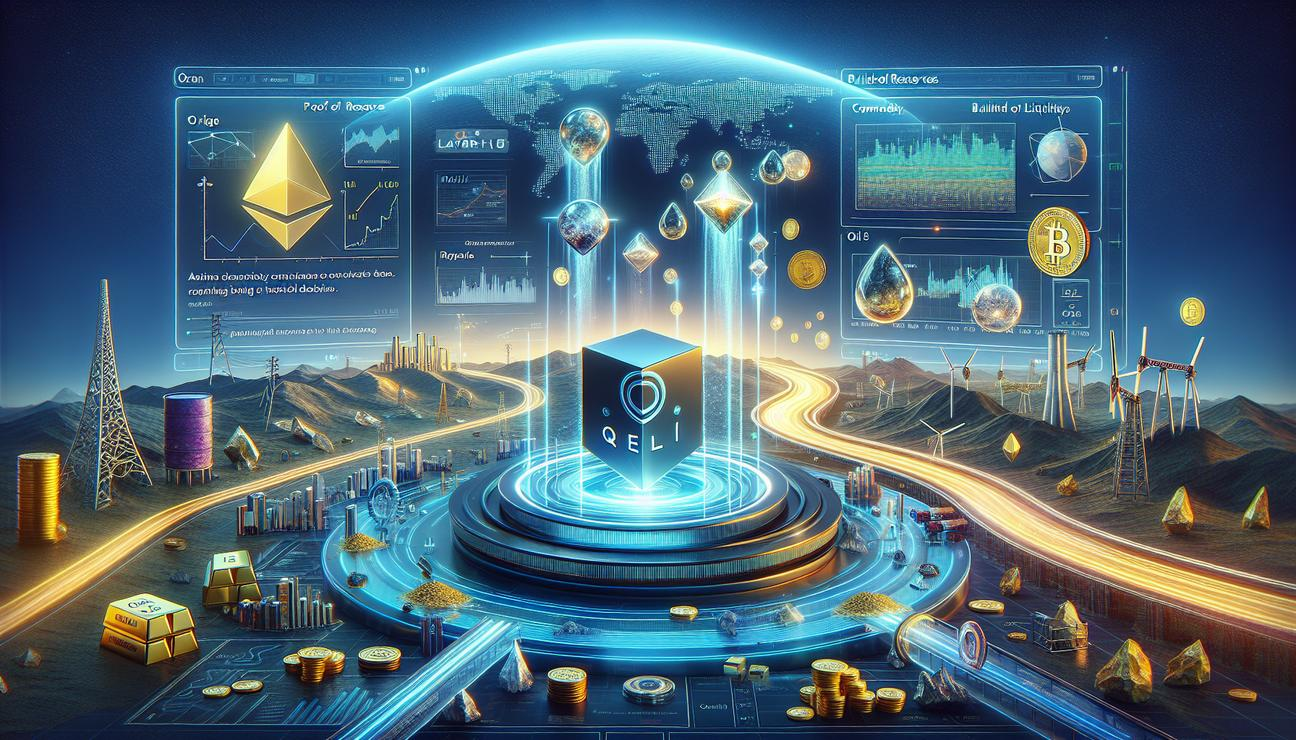
QXMP Labs also activated its own oracle system. In simple language, an oracle is a bridge that brings real-world information into a blockchain so the system can use it. The oracle reads geological and scientific reports and checks that they meet certain rules. It then records the data on-chain as cryptographically verifiable proof-of-reserves. In short, the system creates trustworthy evidence that the real reserves exist and are reserved for tokenized assets. If you want to learn more about blockchain, you can read a brief definition here Blockchain.
The move is described as a big step toward large-scale, compliant tokenization of real-world assets (RWAs) and settlement using a blockchain-based infrastructure. RWAs are physical things or rights in the real world that people might want to own or trade using digital tokens. If you want a simple explanation, see Asset tokenization.
Why liquidity is important in tokenized RWAs
Tokenising real-world assets can help more people buy and sell them. But for this to work well, there must be enough liquidity. Liquidity means how easily an asset can be bought or sold without causing big price changes. In many token platforms, liquidity can be thin, meaning it is hard to buy or sell large amounts without affecting prices.
Most stablecoin models try to keep price stability by using a mix of reserves (assets kept to back the token) and trading demand. However, as tokenisation grows, those traditional liquidity methods can become weaker. QXMP Labs says a key difference is that they build liquidity into the system from the start, rather than trying to fix it after the fact. This approach aims to create a stronger and more predictable flow of liquidity as more RWAs are tokenised.
How the 30% design works
At the core of QXMP Labs’ plan is a unique mechanism that is not common in most token projects. The company says that 30% of all tokenisation proceeds across a seven-year plan, covering 44 planned events that together amount to a $1.1 trillion pipeline, will be routed into the QXMP Labs ecosystem. All of these proceeds settle through the QELT Blockchain, which is built specifically for real-world assets.
What does this mean in plain terms? Instead of waiting for money to arrive later, the system puts liquidity into the structure from the beginning. Each tokenisation event strengthens the same settlement and reserve layer. Over time, many separate asset issuances connect to create a single, recurring liquidity engine. This design is intended to close a long-standing liquidity gap that has limited how easily RWAs can be adopted around the world.
The assets on-chain
QXMP Labs has already registered $1.1 trillion worth of real-world assets on-chain. These assets include commodities, strategic resources, and in-ground reserves located in multiple jurisdictions (different countries or regions).
Important details about these assets include that they are not wrapped, not mirrored, and not synthetically referenced. In other words, these are real assets described directly in the system, not copied or simplified versions. They are cryptographically verified on-chain using regulated reporting standards such as NI 43-101 and JORC, through QXMP’s Proof-of-Reserves Oracle. This oracle is designed to read regulated geotechnical and mining reports and turn them into on-chain evidence of reserves. For context, NI 43-101 is a Canadian standard that explains how mining information should be disclosed to investors. You can learn more about it here NI 43-101, and CRIRSCO, the international reporting framework, here CRIRSCO. JORC is another mineral reporting standard often used in different regions. See the JORC entry here.
QELT blockchain: the liquidity gravity layer
QELT is described as a Layer-1 blockchain. A Layer-1 blockchain is the base protocol that processes and finalizes transactions without needing another chain. Think of Layer-1 as the main highway for data. The system uses QELT as a liquidity gravity layer, a term the company uses to describe how liquidity flows are drawn into and concentrated within the network as tokenisations settle. Over time, more activity flowing through QELT should increase liquidity density rather than create more scattered pockets of liquidity. For a quick explanation of Layer-1, you can read Layer-1 blockchain.
What a base valuation could look like
Using a research approach from Messari Research for Layer-1 blockchains, the company says the combined flows could imply a current indicative base valuation of about USD 43.6 billion for the QELT ecosystem. This figure is based on how much throughput there is, how settlement works, and how recurring liquidity inflows might grow. It does not rely on speculative price speculation alone. It is important to note the company includes a disclaimer: Messari Research has not authored or endorsed this valuation.
Execution, deployment, and real-world rollout
The people behind QXMP Labs say they have a strong track record of delivering large liquidity activations in live market conditions. They are applying the same disciplined approach to institutional-grade real-world asset infrastructure. The rollout is described as a live deployment at scale, with partnerships at Tier-1 institutions expected to be announced soon.
As the project moves from infrastructure readiness to actual use, the platform is entering a controlled liquidity activation phase. This means the liquidity layer is now open to a limited group of participants so they can test and validate the system before broader market participation. The activation phase is the first time ecosystem participants can engage with the liquidity layer that underpins the QELT Blockchain. This is a stepping-stone toward larger tokenisation flows that will come later.
Where to learn more and how to participate
Details about ecosystem access and activation are being shared through QXMP Labs’ official channels. Registration for early access is currently open through the platform’s portal. Interested readers can visit the public presale portal here: https://presale.qelt.ai/. This site explains how to participate in early access and what steps come next as the system moves toward broader use.
Industry observers note that the tokenisation field is at a crossroads. One path would push for more digitisation of assets and wait for liquidity to appear on its own. The other path, which QXMP Labs has chosen, focuses on building reserve-grade liquidity rails first, and then letting scale grow from there. The company emphasizes that it has committed $1.1 trillion of real-world assets to be registered on-chain to support this approach.
Reference points and additional information
The release points readers to several resources for more context, including an infrastructure overview, a QELT blockchain explorer, early ecosystem access information, and liquidity presale updates. A note accompanies the release stating that the valuation is not endorsed by Messari Research and should be understood as an indicative projection based on the company’s model.
Glossary: simple explanations of key terms
To help readers who are new to this topic, here are short explanations of some terms used in the announcement:
- Blockchain – A way to keep records in a chain of blocks that are linked and checked by many computers. It is hard to change past records because many people have to agree. Learn more.
- Layer-1 blockchain – The main base network where transactions are processed. Layer-2 solutions sit on top to help scale. Learn more.
- Asset tokenization – Turning a real asset (like a building or mineral) into a digital token on a blockchain so ownership can be bought and sold easily. Learn more.
- National Instrument 43-101 (NI 43-101) – A Canadian rule that tells how mining information should be shared with investors to avoid misleading results. Learn more.
- CRIRSCO – An international body and template for reporting mineral results and reserves to align with codes like NI 43-101 and JORC. Learn more.
- Proof-of-Reserves – A way to prove on the blockchain that certain physical resources exist and are reserved for certain assets. Learn more.
Summary: QXMP Labs is moving forward with a system that aims to make it easier to transact real-world assets on a blockchain, while trying to keep liquidity strong from the start. The company emphasizes that its approach builds liquidity into the network itself and that it will publish more details as it rolls out to more participants. As with all new financial systems, readers should follow official channels for updates and consider potential risks involved in early-stage technology and markets.