March is here, and the clock is ticking
It’s March now. The first quarterly window is nearly over. People who own the PI token from Pi Network want to know one big thing: what will the PI price be by the end of the month? In the crypto world, people try to predict prices from time to time. This time, instead of asking a human analyst, we asked an artificial intelligence model from Gemini. Gemini is one of the well-known AI tools used to think about money and markets.
If AI is part of the future of finance, it makes sense to check how an AI model reasons about price moves. So what did Gemini say about PI at the end of March? The answer is interesting because it covers several possible outcomes. Here is how the model described three scenarios. It uses some playful crypto slang, but we will keep things clear and simple.
Three scenarios for PI price this month
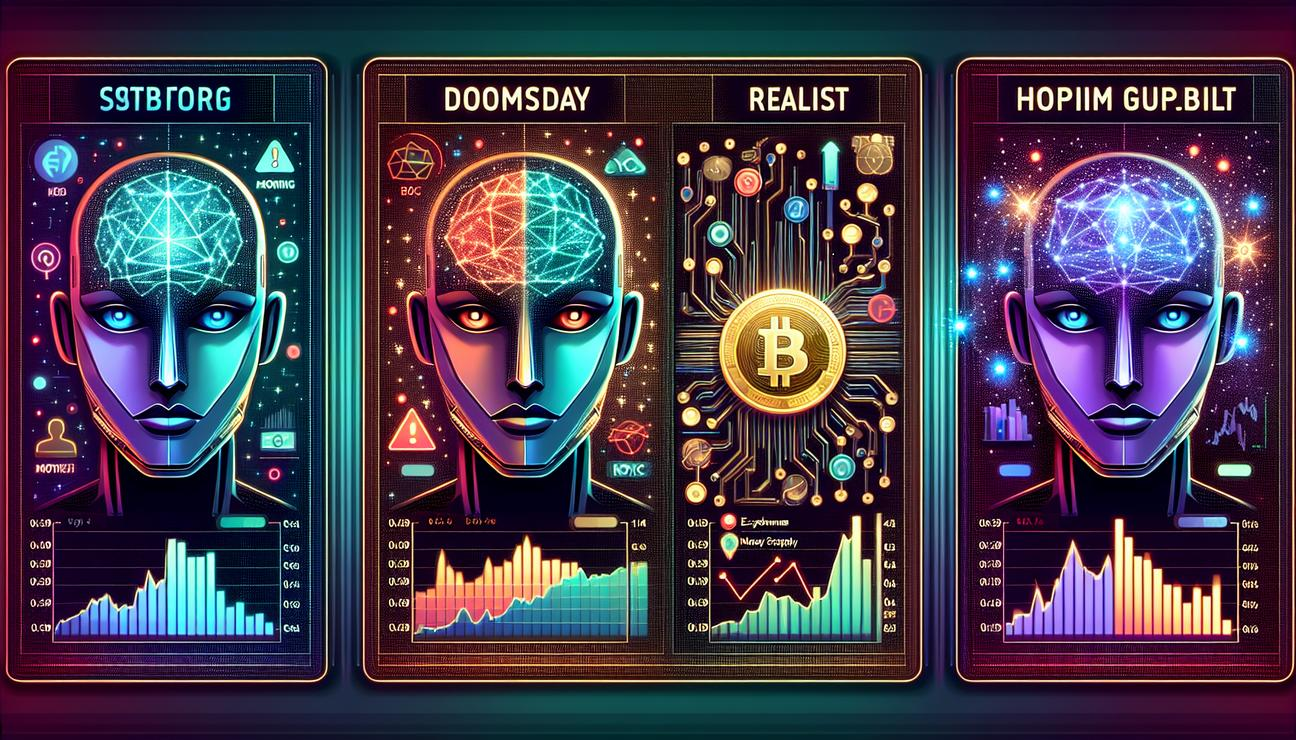
Gemini named the three potential futures with light humor: “The Doomsday Bot,” “The Boring Realist,” and “The Hopium Generator.” These names are meant to cover different kinds of market moves. Let’s look at each one, using plain language.
- The Doomsday Bot: The model forecasts PI could fall to about $0.14 or even lower by the end of the month. Why could this happen? The idea is that some early buyers might sell quickly once they get a small chance to cash out as more changes come to the Pi Network—specifically, when new Know Your Customer (KYC) changes unlock liquidity. If people rush to sell, the price can drop fast. KYC stands for Know Your Customer. It means rules that require a business to verify who its customers are, to make sure money is not used for bad purposes. You can read more about KYC in simple terms here: Know Your Customer (KYC).
- The Boring Realist: The price could move in a narrow range and go sideways. In this case, the Pi Core team would continue its careful, slow approach. The model suggests PI might trade between about $0.17 and $0.20 for a while. This is called “sideways” movement in markets—prices don’t rise or fall much for a period of time.
- The Hopium Generator: The bullish scenario. The model imagines the price climbing above $0.50, which would be more than a 3x increase from current levels. This would require a lot of positive cooperation and growth: the network would need to bring millions of users into spending, and there would need to be strong interest from big cryptocurrency exchanges listing PI. In short, a big wave of new money and attention would push the price higher.
So, Gemini tries to cover every sensible possibility: a drop, a quiet period with small moves, and a strong rise. The idea is not to pick one outcome, but to show a range of reasonable possibilities. It’s a bit like a weather forecast that says there could be sun, clouds, or rain, depending on how people behave in the market.
Gemini’s reality check: how likely is a big move?
Here’s where the model tries to be practical. After laying out the three scenarios, Gemini adds a clear caveat. It says, in simple words: don’t rush to spend big money based on these predictions. The model points out important facts that make a very large price jump unlikely without a lot of new money coming into the ecosystem.
The model notes that PI was trading around $0.17, and there are more than 9.4 billion PI tokens that are currently circulating in the market. Circulating supply means the number of coins or tokens that are in the hands of the public and available to buy or sell right now. If you want a quick definition of circulating supply, it means the coins that are out there in the market, not locked away or not yet issued. You can read more about price and money-related ideas here: Money supply and related terms. A simple explanation is that money supply is the total amount of money that is available in the economy at a given time. See more at Money supply.
To move from around $0.17 to $0.50 could require a very large amount of money to enter the PI ecosystem. The model says that would mean billions of dollars in actual capital. Capital here means real money invested by buyers in the market. It’s not easy to conjure up billions of dollars out of nowhere. The model reminds readers to keep expectations in check as the end of the quarter approaches. In short, while a big rise is possible in theory, it would require a strong and unusual surge of money and interest in PI.
What this means for Pi Network investors and followers
Why does this matter? First, price predictions are not guarantees. They are educated guesses based on current information, patterns, and what different groups of people might do. The Pi Network project has a growing community, but it also faces a lot of uncertainty common to many crypto projects. The exact price depends on many things, including user adoption, technology development, and how other exchanges treat PI in the weeks ahead.
Second, the idea of predicting a price is different from what a project needs to succeed. A price rise is nice, but the real goal for a blockchain or token is to create useful services, buy and sell things easily, and keep the network secure and valuable. If PI becomes widely used for payments or other purposes, the price could rise over time. But this usually happens gradually, not in a straight line in a single month.
In plain language: three possible moods for PI
Let’s restate the three moods in simple terms so anyone can understand:
- Bad mood (Doomsday): Price goes down, possibly a lot, by the end of March. This would happen if many people decide to sell quickly and there is not enough new buying to support the price.
- Calm mood (Boring Realist): The price stays in a small range, moving up and down a little. This would happen if there is steady, careful progress and no big surprises.
- Excited mood (Hopium Generator): The price rises a lot, above $0.50. This would require a big boost of new money, more users who spend PI, and big exchange listings that bring in new buyers.
All three moods are possible in theory. The idea is to show what could happen, not to tell you exactly what will happen. For traders and fans of PI, it’s important to watch current events, not just predictions. Things like new features, partnerships, or changes in how the Pi Network operates can affect price as much as a single forecast.
Why forecasts should be treated with care
Forecasts like these can be interesting, but they are not guarantees. Cryptocurrency markets can be very unpredictable. Prices can move quickly up or down for reasons that are hard to predict in advance. That is why many financial experts say you should be careful with your investments. The key idea is to learn about the project, understand its goals, and only invest what you can afford to lose if the market moves against you.
What to understand about KYC, tokens, and market thinking
To help new readers, here are quick explanations of some common ideas you may hear in crypto news. These explanations include simple examples. If you want to read more, you can look up the linked definitions from Wikipedia.
- Know Your Customer (KYC): This is a standard process in many financial services. It means verifying who a customer is to prevent fraud and crime. It’s like showing your ID before you open a bank account. Know your customer.
- Cryptocurrency: A digital form of money that uses computer networks. It is not controlled by a single government or bank, and it uses math to secure transactions. Cryptocurrency.
- Cryptocurrency exchange: A platform where people can buy and sell digital currencies for money or other digital currencies. Think of it like a digital market for currencies. Cryptocurrency exchange.
- Blockchain: A public, digital ledger that records all transactions in a secure way. It is like a chain of links where each link holds a record of who gave what to whom. This record is shared across many computers. Blockchain.
- Money supply: The total amount of money available in an economy at a given time. In crypto, people also talk about how much of a token is circulating, which affects how easy it is to buy or sell. Money supply.
Understanding these ideas helps readers think clearly about what moves a price and what does not. Predictions can be fun to read, but they should never replace careful research and careful thinking about risk.
Bottom line
Gemini, the AI model used in this story, thoughtfully offered three possible future moods for Pi Network’s PI price at the end of March. It suggested a crash, a flat market, or a big rise. Then it added important caution: very big moves would require a large amount of real money entering the system, which may be unlikely in the short term given current supply and market conditions.
For anyone following PI, the best approach is to stay informed about the project’s progress, understand the risks, and avoid making too-big bets based only on a single forecast. The Pi Network’s success depends on many factors, including how it develops technology, how users adopt the platform, and how external markets react to crypto as a whole.
The original report that sparked this discussion was published by CryptoPotato, and it’s a reminder that AI tools can offer interesting viewpoints, but they do not guarantee what will happen in real markets.
Glossary and quick references
- Know Your Customer (KYC) – identity checks and risk assessments in finance.
- Cryptocurrency – digital money that uses computer networks and cryptography.
- Cryptocurrency exchange – a place to buy and sell crypto with money or other crypto.
- Blockchain – a secure, shared ledger of transactions.
- Money supply – the total amount of money available in an economy or market at a time.