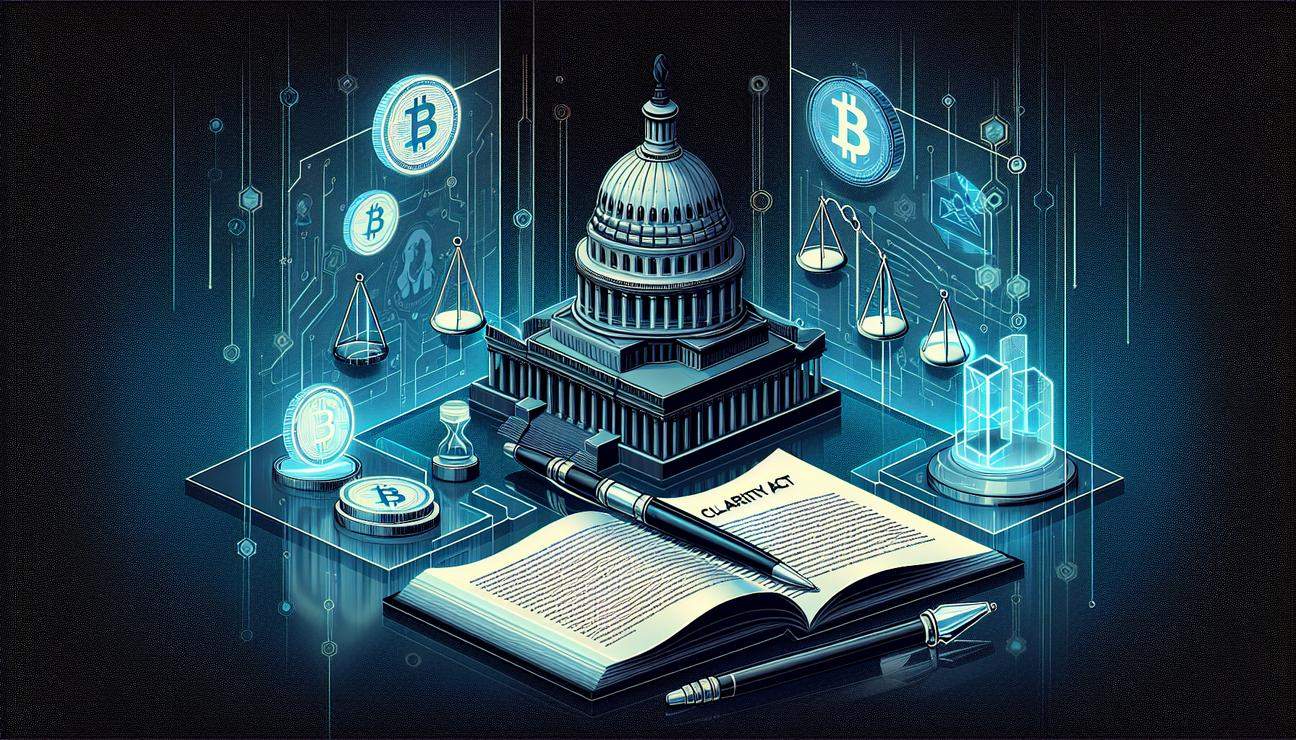
The Clarity Act was approved by the U.S. House of Representatives in July 2025. It had support from members of both major political parties. By January 2026, the bill was still being studied and talked about in the Senate. Lawmakers were looking at different parts of the bill in different Senate committees.
Right now, the bill is under review by the Senate Committee on Banking, Housing, and Urban Affairs. This committee looks at issues like banks, housing, and how money moves in cities and towns. The Senate Agriculture Committee is giving input on parts of the bill that relate to the commodities market and financial rules built on something called the CFTC. The CFTC is the U.S. agency that watches futures and other complex products. If you want to learn more, you can read about the CFTC.
Senate committees have held hearings and published early drafts as part of larger market rules. A lot of time has passed on markup discussions. A markup is when lawmakers edit a bill line by line in committee. They are debating important questions, including how to protect investors. Differences between the Senate’s drafts and the House’s bill are still being worked out.
Bitwise Chief Investment Officer Matt Hougan said something important: if the Clarity Act does not become law, the U.S. crypto market would enter a difficult period. He called it a show me period. In his view, the industry would have roughly three years to prove that crypto is useful to everyday Americans and to the traditional financial system. This means supporters would need real, wide use for crypto in real life, not just promises from companies.
To explain, a stablecoin is a type of cryptocurrency that tries to keep its value steady, often by tying it to something stable like a dollar. A strong use case for crypto could include things like stablecoins or other new ways to use tokens. If Clarity Act does not pass, people would look for actual adoption of these ideas in real markets rather than political promises.
This idea of a “show me” period is somewhat similar to how some big tech services grew. People often talk about how Uber and Airbnb started in uncertain regulatory places. They became very popular, and lawmakers eventually changed the rules to reflect what users were actually doing. Mr. Hougan said crypto might need to follow a similar path if the Clarity Act fails. He believes real-world use would push lawmakers to adjust rules, just as those early companies did.
Hougan also gave a warning. If after several years crypto is still seen as an activity outside the core financial system, political leadership could shift. In that case, investors might wait for clear proof of real-world adoption before they push prices higher. This is different from the optimistic forecast that the Clarity Act passing would bring a big market rally. If lawmakers approve a version of the bill that the industry supports, investors might expect stablecoins, tokenization, and other crypto uses to grow, and prices could rise quickly.
Inside the industry, tensions are visible as well. Earlier this month, a research group called Citron Research accused Coinbase’s chief executive, Brian Armstrong, of opposing the act to protect Coinbase’s stablecoin business from more competition. The issue started after Coinbase decided to withdraw support for the bill on January 14. Coinbase said the bill raised concerns about tokenized equities, privacy in DeFi (which means decentralized finance), the rewards given for using stablecoins, and the shift of regulatory power toward the U.S. Securities and Exchange Commission. Citron said Armstrong was worried about competition from other firms such as Securitize. This disagreement shows how people in the industry are unsure about the best path forward for crypto regulation.
In summary, supporters want clear rules that help crypto grow, while opponents worry about giving a regulator more power or slowing down innovation. The next steps depend on how the Senate committees discuss and revise the Clarity Act, and on how the crypto industry responds to new rules when they finally come.
For readers unfamiliar with some terms, here are quick explanations with simple examples:
- Clarity Act: Clarity Act — A proposed U.S. law (in this article it is about crypto rules) that aims to make clear how crypto investments should be treated and regulated.
- Stablecoin: Stablecoin — A kind of cryptocurrency designed to hold a steady value, often by tying its price to a safe asset like the U.S. dollar or by using automatic rules that try to keep the price stable.
- Uber: Uber — A large company that lets people get rides or delivery services through a smartphone app. It grew quickly even while rules were changing in different places.
- Coinbase: Coinbase — A big online place where people can buy, sell, and store digital money like Bitcoin and other crypto assets.
- United States Securities and Exchange Commission: SEC — The U.S. government agency that watches financial markets to protect investors and keep markets fair.
Note: This article uses the language and ideas from the original news report. The definitions above are simplified explanations to help readers understand the main ideas. If you want to learn more, you can read the linked Wikipedia pages for the terms.